
This collection contains his early old time radio appearances and recordings from his political career and presidency.
678 old time radio show recordings
(total playtime 257 hours, 5 min)
available in the following formats:
11 MP3 CDs
or
255 Audio CDs
Text on OTRCAT.com ©2001-2026 OTRCAT INC All Rights Reserved. Reproduction is prohibited.
Ronald Reagan
(1911 – 2004)

(February 6th, 1911 - June 5th, 2004)

Reagan was born in Illinois. Early in life he developed and strong faith in the essential goodness of people. After graduating from Eureka College in 1932 he traveled to Iowa and landed a job announcing home Iowa Hawkeyes football games on the radio. Other radio jobs followed, including as announcer for the Chicago Cubs, specializing in play-by-play announcing games the station received by wire. Traveling to California with the Cubs, Reagan was given a screen test in 1937 and landed a contract with Warner Brothers, working mostly in the B-film unit.
Reagan is fondly remembered for his role as George "The Gipper" Gipp in 1940's Knute Rockne, All American. His role in 1942's King's Row "made me a star." Reagan played a double amputee who gives the line "Where's the rest of me?", which would be the title of his 1965 autobiography. Unfortunately, with WWII, Reagan was not able to capitalize on the starring moment.
After the War Reagan became President of the Screen Actor's Guild, guiding the union through the Taft-Hartley Act, the House UnAmerican Activities Hearings, and the Hollywood Blacklist period. It was through the Blacklist Scandal that Reagan met his second wife, Nancy Davis (Davis' name mistakenly appeared on a Blacklist, and she sought Reagan's help correcting the slip-up.) Reagan was hired as host of TV's General Electric Theater. Part of his contract required him to tour GE plants 16 weeks of the year, often making as many as 16 speeches a day. He would often talk about his conservative ideals. GE Theater was his last job in the Entertainment Industry.

Reagan had been a life-long Democrat and admired FDR's New Deal Policies. In time he came to value the ideals of Free Markets, Conservatism, lower taxes and limited government. In 1962 Reagan joined the Republican Party ("I didn't leave the Democratic Party, the party left me.")
He gave his endorsement to Conservative presidential candidate Barry Goldwater in 1964. Reagan's "Time for Choosing" speech (included in this collection) raised $1 million dollars for the Goldwater Campaign, and is credited with starting Reagan's political career ("Well, the trouble with our liberal friends is not that they're ignorant; it's just that they know so much that isn't so.")
Impressed with his political views and charisma, California Republicans encouraged Reagan to run for Governor in 1966, and he held the post until 1975. In 1976 he challenged the incumbency of Gerald Ford for the Republican Presidential nomination, but was defeated at the convention. In 1980 he won the nomination and defeated Jimmy Carter in the general election during a time of growing domestic concerns and the Iran Hostage Crisis. During his inaugural address the hostages were freed from the U.S. Embassy in Tehran.
This collection celebrates not only the Presidency of the Great Communicator, but the show biz career of a great entertainer. Included are movie related appearances on Lux Radio Theater and Screen Guild Theater. Reagan returns to his Sports Caster roots as he takes over for the vacationing host of Bill Stern's Sports Reel. Suspense takes advantage of Reagan's dramatic sensibilities. Part of the reason Reagan was such a beloved President was that he was able to maintain a sense of humor in most situations. This is heard in many of later speeches, as well as appearances on Bing Crosby and The Burns and Allen Show.
Reagan's public career is well represented here as well, from the beginning of his political presence in the "Time for Choosing" speech through the 1992 Republican National Convention. The collection closes with coverage of Ronald Reagan's funeral service in June of 2004. See also: Attempted Assassination of Ronald Reagan recordings.

See additional Presidential Recordings:
Text on OTRCAT.com ©2001-2026 OTRCAT INC All Rights Reserved. Reproduction is prohibited.
You have reached the maximum number of votes for a unregistered user.
Please login or create a new account to continue...
You have reached the maximum number to down votes in this page.
Filenames of old time radio shows which are dated as yy-mm-dd. For example:
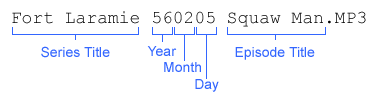
This episode from the series "Fort Laramie" was broadcast on February 5, 1956 with the episode title "Squaw Man"
Filenames of old time radio shows which are dated as yy-mm-dd. For example:
This episode from the series "Fort Laramie" was broadcast on February 5, 1956 with the episode title "Squaw Man"
Ronald Reagan Disc A001
|
Add Audio CD to Cart - $5.00 |
Ronald Reagan Disc A002
|
Add Audio CD to Cart - $5.00 |
Ronald Reagan Disc A003
|
Add Audio CD to Cart - $5.00 |
Ronald Reagan Disc A004
|
Add Audio CD to Cart - $5.00 |
Ronald Reagan Disc A005
|
Add Audio CD to Cart - $5.00 |
Ronald Reagan Disc A006
|
Add Audio CD to Cart - $5.00 |
Ronald Reagan Disc A007
|
Add Audio CD to Cart - $5.00 |
Ronald Reagan Disc A008
|
Add Audio CD to Cart - $5.00 |
Ronald Reagan Disc A009
|
Add Audio CD to Cart - $5.00 |
Ronald Reagan Disc A010
|
Add Audio CD to Cart - $5.00 |
Ronald Reagan Disc A011
|
Add Audio CD to Cart - $5.00 |
Ronald Reagan Disc A012
|
Add Audio CD to Cart - $5.00 |
Ronald Reagan Disc A013
|
Add Audio CD to Cart - $5.00 |
Ronald Reagan Disc A014
|
Add Audio CD to Cart - $5.00 |
Ronald Reagan Disc A015
|
Add Audio CD to Cart - $5.00 |
Ronald Reagan Disc A016
|
Add Audio CD to Cart - $5.00 |
Ronald Reagan Disc A017
|
Add Audio CD to Cart - $5.00 |
Ronald Reagan Disc A018
|
Add Audio CD to Cart - $5.00 |
Ronald Reagan Disc A019
|
Add Audio CD to Cart - $5.00 |
Ronald Reagan Disc A020
|
Add Audio CD to Cart - $5.00 |
Ronald Reagan Disc A021
|
Add Audio CD to Cart - $5.00 |
Ronald Reagan Disc A022
|
Add Audio CD to Cart - $5.00 |
Ronald Reagan Disc A023
|
Add Audio CD to Cart - $5.00 |
Ronald Reagan Disc A024
|
Add Audio CD to Cart - $5.00 |
Ronald Reagan Disc A025
|
Add Audio CD to Cart - $5.00 |
Ronald Reagan Disc A026
|
Add Audio CD to Cart - $5.00 |
Ronald Reagan Disc A027
|
Add Audio CD to Cart - $5.00 |
Ronald Reagan Disc A028
|
Add Audio CD to Cart - $5.00 |
Ronald Reagan Disc A029
|
Add Audio CD to Cart - $5.00 |
Ronald Reagan Disc A030
|
Add Audio CD to Cart - $5.00 |
Ronald Reagan Disc A031
|
Add Audio CD to Cart - $5.00 |
Ronald Reagan Disc A032
|
Add Audio CD to Cart - $5.00 |
Ronald Reagan Disc A033
|
Add Audio CD to Cart - $5.00 |
Ronald Reagan Disc A034
|
Add Audio CD to Cart - $5.00 |
Ronald Reagan Disc A035
|
Add Audio CD to Cart - $5.00 |
Ronald Reagan Disc A036
|
Add Audio CD to Cart - $5.00 |
Ronald Reagan Disc A037
|
Add Audio CD to Cart - $5.00 |
Ronald Reagan Disc A038
|
Add Audio CD to Cart - $5.00 |
Ronald Reagan Disc A039
|
Add Audio CD to Cart - $5.00 |
Ronald Reagan Disc A040
|
Add Audio CD to Cart - $5.00 |
Ronald Reagan Disc A041
|
Add Audio CD to Cart - $5.00 |
Ronald Reagan Disc A042
|
Add Audio CD to Cart - $5.00 |
Ronald Reagan Disc A043
|
Add Audio CD to Cart - $5.00 |
Ronald Reagan Disc A044
|
Add Audio CD to Cart - $5.00 |
Ronald Reagan Disc A045
|
Add Audio CD to Cart - $5.00 |
Ronald Reagan Disc A046
|
Add Audio CD to Cart - $5.00 |
Ronald Reagan Disc A047
|
Add Audio CD to Cart - $5.00 |
Ronald Reagan Disc A048
|
Add Audio CD to Cart - $5.00 |
Ronald Reagan Disc A049
|
Add Audio CD to Cart - $5.00 |
Ronald Reagan Disc A050
|
Add Audio CD to Cart - $5.00 |
Ronald Reagan Disc A051
|
Add Audio CD to Cart - $5.00 |
Ronald Reagan Disc A052
|
Add Audio CD to Cart - $5.00 |
Ronald Reagan Disc A053
|
Add Audio CD to Cart - $5.00 |
Ronald Reagan Disc A054
|
Add Audio CD to Cart - $5.00 |
Ronald Reagan Disc A055
|
Add Audio CD to Cart - $5.00 |
Ronald Reagan Disc A056
|
Add Audio CD to Cart - $5.00 |
Ronald Reagan Disc A057
|
Add Audio CD to Cart - $5.00 |
Ronald Reagan Disc A058
|
Add Audio CD to Cart - $5.00 |
Ronald Reagan Disc A059
|
Add Audio CD to Cart - $5.00 |
Ronald Reagan Disc A060
|
Add Audio CD to Cart - $5.00 |
Ronald Reagan Disc A061
|
Add Audio CD to Cart - $5.00 |
Ronald Reagan Disc A062
|
Add Audio CD to Cart - $5.00 |
Ronald Reagan Disc A063
|
Add Audio CD to Cart - $5.00 |
Ronald Reagan Disc A064
|
Add Audio CD to Cart - $5.00 |
Ronald Reagan Disc A065
|
Add Audio CD to Cart - $5.00 |
Ronald Reagan Disc A066
|
Add Audio CD to Cart - $5.00 |
Ronald Reagan Disc A067
|
Add Audio CD to Cart - $5.00 |
Ronald Reagan Disc A068
|
Add Audio CD to Cart - $5.00 |
Ronald Reagan Disc A069
|
Add Audio CD to Cart - $5.00 |
Ronald Reagan Disc A070
|
Add Audio CD to Cart - $5.00 |
Ronald Reagan Disc A071
|
Add Audio CD to Cart - $5.00 |
Ronald Reagan Disc A072
|
Add Audio CD to Cart - $5.00 |
Ronald Reagan Disc A073
|
Add Audio CD to Cart - $5.00 |
Ronald Reagan Disc A074
|
Add Audio CD to Cart - $5.00 |
Ronald Reagan Disc A075
|
Add Audio CD to Cart - $5.00 |
Ronald Reagan Disc A076
|
Add Audio CD to Cart - $5.00 |
Ronald Reagan Disc A077
|
Add Audio CD to Cart - $5.00 |
Ronald Reagan Disc A078
|
Add Audio CD to Cart - $5.00 |
Ronald Reagan Disc A079
|
Add Audio CD to Cart - $5.00 |
Ronald Reagan Disc A080
|
Add Audio CD to Cart - $5.00 |
Ronald Reagan Disc A081
|
Add Audio CD to Cart - $5.00 |
Ronald Reagan Disc A082
|
Add Audio CD to Cart - $5.00 |
Ronald Reagan Disc A083
|
Add Audio CD to Cart - $5.00 |
Ronald Reagan Disc A084
|
Add Audio CD to Cart - $5.00 |
Ronald Reagan Disc A085
|
Add Audio CD to Cart - $5.00 |
Ronald Reagan Disc A086
|
Add Audio CD to Cart - $5.00 |
Ronald Reagan Disc A087
|
Add Audio CD to Cart - $5.00 |
Ronald Reagan Disc A088
|
Add Audio CD to Cart - $5.00 |
Ronald Reagan Disc A089
|
Add Audio CD to Cart - $5.00 |
Ronald Reagan Disc A090
|
Add Audio CD to Cart - $5.00 |
Ronald Reagan Disc A091
|
Add Audio CD to Cart - $5.00 |
Ronald Reagan Disc A092
|
Add Audio CD to Cart - $5.00 |
Ronald Reagan Disc A093
|
Add Audio CD to Cart - $5.00 |
Ronald Reagan Disc A094
|
Add Audio CD to Cart - $5.00 |
Ronald Reagan Disc A095
|
Add Audio CD to Cart - $5.00 |
Ronald Reagan Disc A096
|
Add Audio CD to Cart - $5.00 |
Ronald Reagan Disc A097
|
Add Audio CD to Cart - $5.00 |
Ronald Reagan Disc A098
|
Add Audio CD to Cart - $5.00 |
Ronald Reagan Disc A099
|
Add Audio CD to Cart - $5.00 |
Ronald Reagan Disc A100
|
Add Audio CD to Cart - $5.00 |
Ronald Reagan Disc A101
|
Add Audio CD to Cart - $5.00 |
Ronald Reagan Disc A102
|
Add Audio CD to Cart - $5.00 |
Ronald Reagan Disc A103
|
Add Audio CD to Cart - $5.00 |
Ronald Reagan Disc A104
|
Add Audio CD to Cart - $5.00 |
Ronald Reagan Disc A105
|
Add Audio CD to Cart - $5.00 |
Ronald Reagan Disc A106
|
Add Audio CD to Cart - $5.00 |
Ronald Reagan Disc A107
|
Add Audio CD to Cart - $5.00 |
Ronald Reagan Disc A108
|
Add Audio CD to Cart - $5.00 |
Ronald Reagan Disc A109
|
Add Audio CD to Cart - $5.00 |
Ronald Reagan Disc A110
|
Add Audio CD to Cart - $5.00 |
Ronald Reagan Disc A111
|
Add Audio CD to Cart - $5.00 |
Ronald Reagan Disc A112
|
Add Audio CD to Cart - $5.00 |
Ronald Reagan Disc A113
|
Add Audio CD to Cart - $5.00 |
Ronald Reagan Disc A114
|
Add Audio CD to Cart - $5.00 |
Ronald Reagan Disc A115
|
Add Audio CD to Cart - $5.00 |
Ronald Reagan Disc A116
|
Add Audio CD to Cart - $5.00 |
Ronald Reagan Disc A117
|
Add Audio CD to Cart - $5.00 |
Ronald Reagan Disc A118
|
Add Audio CD to Cart - $5.00 |
Ronald Reagan Disc A119
|
Add Audio CD to Cart - $5.00 |
Ronald Reagan Disc A120
|
Add Audio CD to Cart - $5.00 |
Ronald Reagan Disc A121
|
Add Audio CD to Cart - $5.00 |
Ronald Reagan Disc A122
|
Add Audio CD to Cart - $5.00 |
Ronald Reagan Disc A123
|
Add Audio CD to Cart - $5.00 |
Ronald Reagan Disc A124
|
Add Audio CD to Cart - $5.00 |
Ronald Reagan Disc A125
|
Add Audio CD to Cart - $5.00 |
Ronald Reagan Disc A126
|
Add Audio CD to Cart - $5.00 |
Ronald Reagan Disc A127
|
Add Audio CD to Cart - $5.00 |
Ronald Reagan Disc A128
|
Add Audio CD to Cart - $5.00 |
Ronald Reagan Disc A129
|
Add Audio CD to Cart - $5.00 |
Ronald Reagan Disc A130
|
Add Audio CD to Cart - $5.00 |
Ronald Reagan Disc A131
|
Add Audio CD to Cart - $5.00 |
Ronald Reagan Disc A132
|
Add Audio CD to Cart - $5.00 |
Ronald Reagan Disc A133
|
Add Audio CD to Cart - $5.00 |
Ronald Reagan Disc A134
|
Add Audio CD to Cart - $5.00 |
Ronald Reagan Disc A135
|
Add Audio CD to Cart - $5.00 |
Ronald Reagan Disc A136
|
Add Audio CD to Cart - $5.00 |
Ronald Reagan Disc A137
|
Add Audio CD to Cart - $5.00 |
Ronald Reagan Disc A138
|
Add Audio CD to Cart - $5.00 |
Ronald Reagan Disc A139
|
Add Audio CD to Cart - $5.00 |
Ronald Reagan Disc A140
|
Add Audio CD to Cart - $5.00 |
Ronald Reagan Disc A141
|
Add Audio CD to Cart - $5.00 |
Ronald Reagan Disc A142
|
Add Audio CD to Cart - $5.00 |
Ronald Reagan Disc A143
|
Add Audio CD to Cart - $5.00 |
Ronald Reagan Disc A144
|
Add Audio CD to Cart - $5.00 |
Ronald Reagan Disc A145
|
Add Audio CD to Cart - $5.00 |
Ronald Reagan Disc A146
|
Add Audio CD to Cart - $5.00 |
Ronald Reagan Disc A147
|
Add Audio CD to Cart - $5.00 |
Ronald Reagan Disc A148
|
Add Audio CD to Cart - $5.00 |
Ronald Reagan Disc A149
|
Add Audio CD to Cart - $5.00 |
Ronald Reagan Disc A150
|
Add Audio CD to Cart - $5.00 |
Ronald Reagan Disc A151
|
Add Audio CD to Cart - $5.00 |
Ronald Reagan Disc A152
|
Add Audio CD to Cart - $5.00 |
Ronald Reagan Disc A153
|
Add Audio CD to Cart - $5.00 |
Ronald Reagan Disc A154
|
Add Audio CD to Cart - $5.00 |
Ronald Reagan Disc A155
|
Add Audio CD to Cart - $5.00 |
Ronald Reagan Disc A156
|
Add Audio CD to Cart - $5.00 |
Ronald Reagan Disc A157
|
Add Audio CD to Cart - $5.00 |
Ronald Reagan Disc A158
|
Add Audio CD to Cart - $5.00 |
Ronald Reagan Disc A159
|
Add Audio CD to Cart - $5.00 |
Ronald Reagan Disc A160
|
Add Audio CD to Cart - $5.00 |
Ronald Reagan Disc A161
|
Add Audio CD to Cart - $5.00 |
Ronald Reagan Disc A162
|
Add Audio CD to Cart - $5.00 |
Ronald Reagan Disc A163
|
Add Audio CD to Cart - $5.00 |
Ronald Reagan Disc A164
|
Add Audio CD to Cart - $5.00 |
Ronald Reagan Disc A165
|
Add Audio CD to Cart - $5.00 |
Ronald Reagan Disc A166
|
Add Audio CD to Cart - $5.00 |
Ronald Reagan Disc A167
|
Add Audio CD to Cart - $5.00 |
Ronald Reagan Disc A168
|
Add Audio CD to Cart - $5.00 |
Ronald Reagan Disc A169
|
Add Audio CD to Cart - $5.00 |
Ronald Reagan Disc A170
|
Add Audio CD to Cart - $5.00 |
Ronald Reagan Disc A171
|
Add Audio CD to Cart - $5.00 |
Ronald Reagan Disc A172
|
Add Audio CD to Cart - $5.00 |
Ronald Reagan Disc A173
|
Add Audio CD to Cart - $5.00 |
Ronald Reagan Disc A174
|
Add Audio CD to Cart - $5.00 |
Ronald Reagan Disc A175
|
Add Audio CD to Cart - $5.00 |
Ronald Reagan Disc A176
|
Add Audio CD to Cart - $5.00 |
Ronald Reagan Disc A177
|
Add Audio CD to Cart - $5.00 |
Ronald Reagan Disc A178
|
Add Audio CD to Cart - $5.00 |
Ronald Reagan Disc A179
|
Add Audio CD to Cart - $5.00 |
Ronald Reagan Disc A180
|
Add Audio CD to Cart - $5.00 |
Ronald Reagan Disc A181
|
Add Audio CD to Cart - $5.00 |
Ronald Reagan Disc A182
|
Add Audio CD to Cart - $5.00 |
Ronald Reagan Disc A183
|
Add Audio CD to Cart - $5.00 |
Ronald Reagan Disc A184
|
Add Audio CD to Cart - $5.00 |
Ronald Reagan Disc A185
|
Add Audio CD to Cart - $5.00 |
Ronald Reagan Disc A186
|
Add Audio CD to Cart - $5.00 |
Ronald Reagan Disc A187
|
Add Audio CD to Cart - $5.00 |
Ronald Reagan Disc A188
|
Add Audio CD to Cart - $5.00 |
Ronald Reagan Disc A189
|
Add Audio CD to Cart - $5.00 |
Ronald Reagan Disc A190
|
Add Audio CD to Cart - $5.00 |
Ronald Reagan Disc A191
|
Add Audio CD to Cart - $5.00 |
Ronald Reagan Disc A192
|
Add Audio CD to Cart - $5.00 |
Ronald Reagan Disc A193
|
Add Audio CD to Cart - $5.00 |
Ronald Reagan Disc A194
|
Add Audio CD to Cart - $5.00 |
Ronald Reagan Disc A195
|
Add Audio CD to Cart - $5.00 |
Ronald Reagan Disc A196
|
Add Audio CD to Cart - $5.00 |
Ronald Reagan Disc A197
|
Add Audio CD to Cart - $5.00 |
Ronald Reagan Disc A198
|
Add Audio CD to Cart - $5.00 |
Ronald Reagan Disc A199
|
Add Audio CD to Cart - $5.00 |
Ronald Reagan Disc A200
|
Add Audio CD to Cart - $5.00 |
Ronald Reagan Disc A201
|
Add Audio CD to Cart - $5.00 |
Ronald Reagan Disc A202
|
Add Audio CD to Cart - $5.00 |
Ronald Reagan Disc A203
|
Add Audio CD to Cart - $5.00 |
Ronald Reagan Disc A204
|
Add Audio CD to Cart - $5.00 |
Ronald Reagan Disc A205
|
Add Audio CD to Cart - $5.00 |
Ronald Reagan Disc A206
|
Add Audio CD to Cart - $5.00 |
Ronald Reagan Disc A207
|
Add Audio CD to Cart - $5.00 |
Ronald Reagan Disc A208
|
Add Audio CD to Cart - $5.00 |
Ronald Reagan Disc A209
|
Add Audio CD to Cart - $5.00 |
Ronald Reagan Disc A210
|
Add Audio CD to Cart - $5.00 |
Ronald Reagan Disc A211
|
Add Audio CD to Cart - $5.00 |
Ronald Reagan Disc A212
|
Add Audio CD to Cart - $5.00 |
Ronald Reagan Disc A213
|
Add Audio CD to Cart - $5.00 |
Ronald Reagan Disc A214
|
Add Audio CD to Cart - $5.00 |
Ronald Reagan Disc A215
|
Add Audio CD to Cart - $5.00 |
Ronald Reagan Disc A216
|
Add Audio CD to Cart - $5.00 |
Ronald Reagan Disc A217
|
Add Audio CD to Cart - $5.00 |
Ronald Reagan Disc A218
|
Add Audio CD to Cart - $5.00 |
Ronald Reagan Disc A219
|
Add Audio CD to Cart - $5.00 |
Ronald Reagan Disc A220
|
Add Audio CD to Cart - $5.00 |
Ronald Reagan Disc A221
|
Add Audio CD to Cart - $5.00 |
Ronald Reagan Disc A222
|
Add Audio CD to Cart - $5.00 |
Ronald Reagan Disc A223
|
Add Audio CD to Cart - $5.00 |
Ronald Reagan Disc A224
|
Add Audio CD to Cart - $5.00 |
Ronald Reagan Disc A225
|
Add Audio CD to Cart - $5.00 |
Ronald Reagan Disc A226
|
Add Audio CD to Cart - $5.00 |
Ronald Reagan Disc A227
|
Add Audio CD to Cart - $5.00 |
Ronald Reagan Disc A228
|
Add Audio CD to Cart - $5.00 |
Ronald Reagan Disc A229
|
Add Audio CD to Cart - $5.00 |
Ronald Reagan Disc A230
|
Add Audio CD to Cart - $5.00 |
Ronald Reagan Disc A231
|
Add Audio CD to Cart - $5.00 |
Ronald Reagan Disc A232
|
Add Audio CD to Cart - $5.00 |
Ronald Reagan Disc A233
|
Add Audio CD to Cart - $5.00 |
Ronald Reagan Disc A234
|
Add Audio CD to Cart - $5.00 |
Ronald Reagan Disc A235
|
Add Audio CD to Cart - $5.00 |
Ronald Reagan Disc A236
|
Add Audio CD to Cart - $5.00 |
Ronald Reagan Disc A237
|
Add Audio CD to Cart - $5.00 |
Ronald Reagan Disc A238
|
Add Audio CD to Cart - $5.00 |
Ronald Reagan Disc A239
|
Add Audio CD to Cart - $5.00 |
Ronald Reagan Disc A240
|
Add Audio CD to Cart - $5.00 |
Ronald Reagan Disc A241
|
Add Audio CD to Cart - $5.00 |
Ronald Reagan Disc A242
|
Add Audio CD to Cart - $5.00 |
Ronald Reagan Disc A243
|
Add Audio CD to Cart - $5.00 |
Ronald Reagan Disc A244
|
Add Audio CD to Cart - $5.00 |
Ronald Reagan Disc A245
|
Add Audio CD to Cart - $5.00 |
Ronald Reagan Disc A246
|
Add Audio CD to Cart - $5.00 |
Ronald Reagan Disc A247
|
Add Audio CD to Cart - $5.00 |
Ronald Reagan Disc A248
|
Add Audio CD to Cart - $5.00 |
Ronald Reagan Disc A249
|
Add Audio CD to Cart - $5.00 |
Ronald Reagan Disc A250
|
Add Audio CD to Cart - $5.00 |
Ronald Reagan Disc A251
|
Add Audio CD to Cart - $5.00 |
Ronald Reagan Disc A252
|
Add Audio CD to Cart - $5.00 |
Ronald Reagan Disc A253
|
Add Audio CD to Cart - $5.00 |
Ronald Reagan Disc A254
|
Add Audio CD to Cart - $5.00 |
Ronald Reagan Disc A255
|
Add Audio CD to Cart - $5.00 |
Please wait...
COMMENTS
Frances Verified Purchase
Jeff Verified Purchase
Kurt
Leave a comment