
Aloha! This collection includes old time radio shows from all genres from ting-ting steel guitar music to epic Hawaiian Adventure and detective stories to supernatural Tiki tales.
309 old time radio show recordings
(total playtime 90 hours, 38 min)
available in the following formats:
7 MP3 CDs
or
93 Audio CDs
Text on OTRCAT.com ©2001-2026 OTRCAT INC All Rights Reserved. Reproduction is prohibited.

The history of Hawaii is at once violent, beautiful, and heartbreaking. It is a land peopled by one of the most culturally and racially diverse populations on the planet. The greatest commonality among the residents of our Fiftieth State is their love for living in their Island.

Hawaii became an important destination for traders, whalers, and missionaries. The islands were united under King Kamehameha in 1805, but the tiny nation would be a pawn in the Imperial ambitions of larger nations for many years. In 1875, the Kingdom of Hawaii and the United States signed a Treaty of Reciprocity, which allowed for the tax-free importation of Hawaiian sugar and the establishment of a Naval Base at Pearl Harbor. American capital became increasingly important to the Islands, and in 1898, Hawaii was annexed as a United States Territory.
After becoming a Territory, American sugar and pineapple plantations began to dominate the economy, leading to the large scale immigration of Asian workers. During the early Territorial Period, Hawaii began to enter the popular imagination, thanks to the writings of Robert Louis Stevenson, Jack London, and Mark Twain. The music of Hawaii was among Thomas Edison's early wax cylinder recordings.
One element of Hawaiian music is the Steel Guitar. The Steel guitar was adopted by Country musicians, and is featured prominently in the music of the Light Crust Doughboys, among others. The Doughboys' recording of "Honolulu Lou" is included in this collection.

In Hollywood, Don the Beachcomber, the original Tiki bar and the supposed birthplace of the Mai Tai, opened in 1934. The Beachcomber, along with the otherTiki bars that followed, helped to create a false image of the Hawaiian experience. An older Los Angeles tropically themed watering hole, the Cocoanut Grove at the Ambassador Hotel, was the most important hotspot for live entertainment on the West Coast.
The early Tiki craze may have helped to prime audiences for tropical supernatural tales like "The King Shark God" told on The Witch's Tale. This is a story of how greedy white men, entranced by the charms of Island maidens, are drawn to a grisly death.
 These early fantasies of the Islands are a small match for true life adventures in Hawaii. Captains of Industry celebrated the story of Claus Spreckles, who arrives in America nearly penniless from Germany, eventually builds a grocery and sugar empire in California, and convinces the King of Hawaii to lease him land for a huge sugar plantation.
Regular steamship service and promotions by Island based promoters helped to establish Hawaii as a tourist destination. In 1941, a record number of tourists arrived, 31,846, but tourism came to a abrupt halt on Dec. 7, 1941 when the Japanese bombed Pearl Harbor.
Much of the Hawaiian Experience, indeed the American Experience, is defined by Pearl Harbor. NBC's long running Pacific Story, originally intended to explain the War in the Pacific, helps to define America's interest in the Territory. "Melting Pot of the Pacific", broadcast on Jan 4, 1944, is a history of the Hawaiian Territory from the landing of the American Missionaries through the growth of Whaling, and eventually the entry of the Asians in support of the sugar and pineapple industries, culminating with a happy mixing of the races.

After the War Hawaii again began to attract tourists, especially with a post War economic boom and increasingly regular airline service to the Islands. The increased access made Hawaii a popular destination for Radio Detectives, as well. In June of 1947, The Man Called X, Ken Thurston, investigates a land swindle on Maui that is designed to separate veterans from their money. On April 23, 1949, Philip Marlow, played by Gerald Mohr, flew to Hawaii for an interesting case about the Cloak of King Kamehameha.
Jets did not arrive in Hawaii until Statehood in 1959, and liners of the Matson and Presidential Lines, reconfigured after wartime service, came into service in 1948. On one of these boats in January of 1952, Harry Lime gets close to an ex-con's wife on the boat to Hawaii who gives him information about her husband's loot and the guy in Honolulu who has it hidden. Of course, Harry won't get close to the treasure until he gets even closer to a pretty Hawaiian girl.
This collection contains:

Text on OTRCAT.com ©2001-2026 OTRCAT INC All Rights Reserved. Reproduction is prohibited.
You have reached the maximum number of votes for a unregistered user.
Please login or create a new account to continue...
You have reached the maximum number to down votes in this page.
Filenames of old time radio shows which are dated as yy-mm-dd. For example:
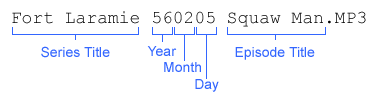
This episode from the series "Fort Laramie" was broadcast on February 5, 1956 with the episode title "Squaw Man"
Filenames of old time radio shows which are dated as yy-mm-dd. For example:
This episode from the series "Fort Laramie" was broadcast on February 5, 1956 with the episode title "Squaw Man"
Hawaii Old Time Radio Shows Disc A001
|
Add Audio CD to Cart - $5.00 |
Hawaii Old Time Radio Shows Disc A002
|
Add Audio CD to Cart - $5.00 |
Hawaii Old Time Radio Shows Disc A003
|
Add Audio CD to Cart - $5.00 |
Hawaii Old Time Radio Shows Disc A004
|
Add Audio CD to Cart - $5.00 |
Hawaii Old Time Radio Shows Disc A005
|
Add Audio CD to Cart - $5.00 |
Hawaii Old Time Radio Shows Disc A006
|
Add Audio CD to Cart - $5.00 |
Hawaii Old Time Radio Shows Disc A007
|
Add Audio CD to Cart - $5.00 |
Hawaii Old Time Radio Shows Disc A008
|
Add Audio CD to Cart - $5.00 |
Hawaii Old Time Radio Shows Disc A009
|
Add Audio CD to Cart - $5.00 |
Hawaii Old Time Radio Shows Disc A010
|
Add Audio CD to Cart - $5.00 |
Hawaii Old Time Radio Shows Disc A011
|
Add Audio CD to Cart - $5.00 |
Hawaii Old Time Radio Shows Disc A012
|
Add Audio CD to Cart - $5.00 |
Hawaii Old Time Radio Shows Disc A013
|
Add Audio CD to Cart - $5.00 |
Hawaii Old Time Radio Shows Disc A014
|
Add Audio CD to Cart - $5.00 |
Hawaii Old Time Radio Shows Disc A015
|
Add Audio CD to Cart - $5.00 |
Hawaii Old Time Radio Shows Disc A016
|
Add Audio CD to Cart - $5.00 |
Hawaii Old Time Radio Shows Disc A017
|
Add Audio CD to Cart - $5.00 |
Hawaii Old Time Radio Shows Disc A018
|
Add Audio CD to Cart - $5.00 |
Hawaii Old Time Radio Shows Disc A019
|
Add Audio CD to Cart - $5.00 |
Hawaii Old Time Radio Shows Disc A020
|
Add Audio CD to Cart - $5.00 |
Hawaii Old Time Radio Shows Disc A021
|
Add Audio CD to Cart - $5.00 |
Hawaii Old Time Radio Shows Disc A022
|
Add Audio CD to Cart - $5.00 |
Hawaii Old Time Radio Shows Disc A023
|
Add Audio CD to Cart - $5.00 |
Hawaii Old Time Radio Shows Disc A024
|
Add Audio CD to Cart - $5.00 |
Hawaii Old Time Radio Shows Disc A025
|
Add Audio CD to Cart - $5.00 |
Hawaii Old Time Radio Shows Disc A026
|
Add Audio CD to Cart - $5.00 |
Hawaii Old Time Radio Shows Disc A027
|
Add Audio CD to Cart - $5.00 |
Hawaii Old Time Radio Shows Disc A028
|
Add Audio CD to Cart - $5.00 |
Hawaii Old Time Radio Shows Disc A029
|
Add Audio CD to Cart - $5.00 |
Hawaii Old Time Radio Shows Disc A030
|
Add Audio CD to Cart - $5.00 |
Hawaii Old Time Radio Shows Disc A031
|
Add Audio CD to Cart - $5.00 |
Hawaii Old Time Radio Shows Disc A032
|
Add Audio CD to Cart - $5.00 |
Hawaii Old Time Radio Shows Disc A033
|
Add Audio CD to Cart - $5.00 |
Hawaii Old Time Radio Shows Disc A034
|
Add Audio CD to Cart - $5.00 |
Hawaii Old Time Radio Shows Disc A035
|
Add Audio CD to Cart - $5.00 |
Hawaii Old Time Radio Shows Disc A036
|
Add Audio CD to Cart - $5.00 |
Hawaii Old Time Radio Shows Disc A037
|
Add Audio CD to Cart - $5.00 |
Hawaii Old Time Radio Shows Disc A038
|
Add Audio CD to Cart - $5.00 |
Hawaii Old Time Radio Shows Disc A039
|
Add Audio CD to Cart - $5.00 |
Hawaii Old Time Radio Shows Disc A040
|
Add Audio CD to Cart - $5.00 |
Hawaii Old Time Radio Shows Disc A041
|
Add Audio CD to Cart - $5.00 |
Hawaii Old Time Radio Shows Disc A042
|
Add Audio CD to Cart - $5.00 |
Hawaii Old Time Radio Shows Disc A043
|
Add Audio CD to Cart - $5.00 |
Hawaii Old Time Radio Shows Disc A044
|
Add Audio CD to Cart - $5.00 |
Hawaii Old Time Radio Shows Disc A045
|
Add Audio CD to Cart - $5.00 |
Hawaii Old Time Radio Shows Disc A046
|
Add Audio CD to Cart - $5.00 |
Hawaii Old Time Radio Shows Disc A047
|
Add Audio CD to Cart - $5.00 |
Hawaii Old Time Radio Shows Disc A048
|
Add Audio CD to Cart - $5.00 |
Hawaii Old Time Radio Shows Disc A049
|
Add Audio CD to Cart - $5.00 |
Hawaii Old Time Radio Shows Disc A050
|
Add Audio CD to Cart - $5.00 |
Hawaii Old Time Radio Shows Disc A051
|
Add Audio CD to Cart - $5.00 |
Hawaii Old Time Radio Shows Disc A052
|
Add Audio CD to Cart - $5.00 |
Hawaii Old Time Radio Shows Disc A053
|
Add Audio CD to Cart - $5.00 |
Hawaii Old Time Radio Shows Disc A054
|
Add Audio CD to Cart - $5.00 |
Hawaii Old Time Radio Shows Disc A055
|
Add Audio CD to Cart - $5.00 |
Hawaii Old Time Radio Shows Disc A056
|
Add Audio CD to Cart - $5.00 |
Hawaii Old Time Radio Shows Disc A057
|
Add Audio CD to Cart - $5.00 |
Hawaii Old Time Radio Shows Disc A058
|
Add Audio CD to Cart - $5.00 |
Hawaii Old Time Radio Shows Disc A059
|
Add Audio CD to Cart - $5.00 |
Hawaii Old Time Radio Shows Disc A060
|
Add Audio CD to Cart - $5.00 |
Hawaii Old Time Radio Shows Disc A061
|
Add Audio CD to Cart - $5.00 |
Hawaii Old Time Radio Shows Disc A062
|
Add Audio CD to Cart - $5.00 |
Hawaii Old Time Radio Shows Disc A063
|
Add Audio CD to Cart - $5.00 |
Hawaii Old Time Radio Shows Disc A064
|
Add Audio CD to Cart - $5.00 |
Hawaii Old Time Radio Shows Disc A065
|
Add Audio CD to Cart - $5.00 |
Hawaii Old Time Radio Shows Disc A066
|
Add Audio CD to Cart - $5.00 |
Hawaii Old Time Radio Shows Disc A067
|
Add Audio CD to Cart - $5.00 |
Hawaii Old Time Radio Shows Disc A068
|
Add Audio CD to Cart - $5.00 |
Hawaii Old Time Radio Shows Disc A069
|
Add Audio CD to Cart - $5.00 |
Hawaii Old Time Radio Shows Disc A070
|
Add Audio CD to Cart - $5.00 |
Hawaii Old Time Radio Shows Disc A071
|
Add Audio CD to Cart - $5.00 |
Hawaii Old Time Radio Shows Disc A072
|
Add Audio CD to Cart - $5.00 |
Hawaii Old Time Radio Shows Disc A073
|
Add Audio CD to Cart - $5.00 |
Hawaii Old Time Radio Shows Disc A074
|
Add Audio CD to Cart - $5.00 |
Hawaii Old Time Radio Shows Disc A075
|
Add Audio CD to Cart - $5.00 |
Hawaii Old Time Radio Shows Disc A076
|
Add Audio CD to Cart - $5.00 |
Hawaii Old Time Radio Shows Disc A077
|
Add Audio CD to Cart - $5.00 |
Hawaii Old Time Radio Shows Disc A078
|
Add Audio CD to Cart - $5.00 |
Hawaii Old Time Radio Shows Disc A079
|
Add Audio CD to Cart - $5.00 |
Hawaii Old Time Radio Shows Disc A080
|
Add Audio CD to Cart - $5.00 |
Hawaii Old Time Radio Shows Disc A081
|
Add Audio CD to Cart - $5.00 |
Hawaii Old Time Radio Shows Disc A082
|
Add Audio CD to Cart - $5.00 |
Hawaii Old Time Radio Shows Disc A083
|
Add Audio CD to Cart - $5.00 |
Hawaii Old Time Radio Shows Disc A084
|
Add Audio CD to Cart - $5.00 |
Hawaii Old Time Radio Shows Disc A085
|
Add Audio CD to Cart - $5.00 |
Hawaii Old Time Radio Shows Disc A086
|
Add Audio CD to Cart - $5.00 |
Hawaii Old Time Radio Shows Disc A087
|
Add Audio CD to Cart - $5.00 |
Hawaii Old Time Radio Shows Disc A088
|
Add Audio CD to Cart - $5.00 |
Hawaii Old Time Radio Shows Disc A089
|
Add Audio CD to Cart - $5.00 |
Hawaii Old Time Radio Shows Disc A090
|
Add Audio CD to Cart - $5.00 |
Hawaii Old Time Radio Shows Disc A091
|
Add Audio CD to Cart - $5.00 |
Hawaii Old Time Radio Shows Disc A092
|
Add Audio CD to Cart - $5.00 |
Hawaii Old Time Radio Shows Disc A093
|
Add Audio CD to Cart - $5.00 |
Please wait...
COMMENTS
Mary Verified Purchase
Michael Verified Purchase
Leave a comment