
Follow the exciting "Counter Spies!"--the fictional unit of the Federal Government lead by David Harding.
77 old time radio show recordings
(total playtime 36 hours, 2 min)
available in the following formats:
2 MP3 CDs
or
38 Audio CDs
Text on OTRCAT.com ©2001-2026 OTRCAT INC All Rights Reserved. Reproduction is prohibited.

Espionage Adventure Drama (1942 - 50)
Washington calling David Harding, counterspy!
Washington calling David Harding, counterspy!


In 1933 Lord's came up with the idea of buying a sailing ship, then broadcasting his adventures via short wave to the network. A team of celebrities and scientists were to accompany Lord to exotic locations around the world, but the highly promoted project fell apart when Lord's ship, the Seth Parker, became unseaworthy in a storm off the coast of American Samoa.
The popular program Gang Busters was another creation of Lord's, running from 1935-57. Gang Busters was billed as "the Crime Fighters of American Broadcasting." Authentic case histories were used for script material, and opened with machine-gun fire and screeching tires. A feature of the show was up to the minute reports on the FBI's Most Wanted criminals.
The Counter Spies were a fictional unit of the Federal Government. Lead by Chief Counter Spy David Harding, the unit was tasked with investigating all reports of suspicious espionage activities funneled to them. Initially the program combined the crime drama thrills of Lord's Gang Busters with the nation's growing patriotism and security awareness in the aftermath of Pearl Harbor. Promotional teasers for the show intimated that Lord had served in official but very confidential intelligence work for the government in the late 30s. His popularity with law enforcement resulting from Gang Busters allowed him access to files of police departments and the FBI, which became rich sources of plot material for Counter-Spy.
Lord held back as little in pursuing production quality. Two sound effects men were reported to spend 10 hours in rehearsal to get the atmosphere just right. Sound was more than background, the effects were vital to presenting the plot of each episode.
As WWII came to a close, and with it concerns about Gestapo and Japanese Black Dragon spies, the Counter-Spy unit still found much to do by foiling the activities of Cold War enemies as well as Narcotics thugs.
The early plots on Counterspy were counter espionage against Germany's Gestapo and Japan's Black Dragon while WWII plots focused on more generic counter-espionage plots like those 
For more espionage and adventure see: The Silent Men, Spy Catcher, Cloak and Dagger, Counterspy - David Harding!, Dangerous Assignment, The Adventures of Frank Race, Harry Lime (The Third Man), Secret Agent K7 Returns, Top Secret, and The Man Called X.

Text on OTRCAT.com ©2001-2026 OTRCAT INC All Rights Reserved. Reproduction is prohibited.
You have reached the maximum number of votes for a unregistered user.
Please login or create a new account to continue...
You have reached the maximum number to down votes in this page.
Filenames of old time radio shows which are dated as yy-mm-dd. For example:
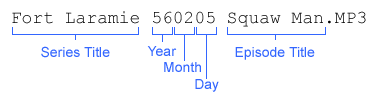
This episode from the series "Fort Laramie" was broadcast on February 5, 1956 with the episode title "Squaw Man"
Filenames of old time radio shows which are dated as yy-mm-dd. For example:
This episode from the series "Fort Laramie" was broadcast on February 5, 1956 with the episode title "Squaw Man"
Counterspy (David Harding, Counterspy!) Disc A001
|
Add Audio CD to Cart - $5.00 |
Counterspy (David Harding, Counterspy!) Disc A002
|
Add Audio CD to Cart - $5.00 |
Counterspy (David Harding, Counterspy!) Disc A003
|
Add Audio CD to Cart - $5.00 |
Counterspy (David Harding, Counterspy!) Disc A004
|
Add Audio CD to Cart - $5.00 |
Counterspy (David Harding, Counterspy!) Disc A005
|
Add Audio CD to Cart - $5.00 |
Counterspy (David Harding, Counterspy!) Disc A006
|
Add Audio CD to Cart - $5.00 |
Counterspy (David Harding, Counterspy!) Disc A007
|
Add Audio CD to Cart - $5.00 |
Counterspy (David Harding, Counterspy!) Disc A008
|
Add Audio CD to Cart - $5.00 |
Counterspy (David Harding, Counterspy!) Disc A009
|
Add Audio CD to Cart - $5.00 |
Counterspy (David Harding, Counterspy!) Disc A010
|
Add Audio CD to Cart - $5.00 |
Counterspy (David Harding, Counterspy!) Disc A011
|
Add Audio CD to Cart - $5.00 |
Counterspy (David Harding, Counterspy!) Disc A012
|
Add Audio CD to Cart - $5.00 |
Counterspy (David Harding, Counterspy!) Disc A013
|
Add Audio CD to Cart - $5.00 |
Counterspy (David Harding, Counterspy!) Disc A014
|
Add Audio CD to Cart - $5.00 |
Counterspy (David Harding, Counterspy!) Disc A015
|
Add Audio CD to Cart - $5.00 |
Counterspy (David Harding, Counterspy!) Disc A016
|
Add Audio CD to Cart - $5.00 |
Counterspy (David Harding, Counterspy!) Disc A017
|
Add Audio CD to Cart - $5.00 |
Counterspy (David Harding, Counterspy!) Disc A018
|
Add Audio CD to Cart - $5.00 |
Counterspy (David Harding, Counterspy!) Disc A019
|
Add Audio CD to Cart - $5.00 |
Counterspy (David Harding, Counterspy!) Disc A020
|
Add Audio CD to Cart - $5.00 |
Counterspy (David Harding, Counterspy!) Disc A021
|
Add Audio CD to Cart - $5.00 |
Counterspy (David Harding, Counterspy!) Disc A022
|
Add Audio CD to Cart - $5.00 |
Counterspy (David Harding, Counterspy!) Disc A023
|
Add Audio CD to Cart - $5.00 |
Counterspy (David Harding, Counterspy!) Disc A024
|
Add Audio CD to Cart - $5.00 |
Counterspy (David Harding, Counterspy!) Disc A025
|
Add Audio CD to Cart - $5.00 |
Counterspy (David Harding, Counterspy!) Disc A026
|
Add Audio CD to Cart - $5.00 |
Counterspy (David Harding, Counterspy!) Disc A027
|
Add Audio CD to Cart - $5.00 |
Counterspy (David Harding, Counterspy!) Disc A028
|
Add Audio CD to Cart - $5.00 |
Counterspy (David Harding, Counterspy!) Disc A029
|
Add Audio CD to Cart - $5.00 |
Counterspy (David Harding, Counterspy!) Disc A030
|
Add Audio CD to Cart - $5.00 |
Counterspy (David Harding, Counterspy!) Disc A031
|
Add Audio CD to Cart - $5.00 |
Counterspy (David Harding, Counterspy!) Disc A032
|
Add Audio CD to Cart - $5.00 |
Counterspy (David Harding, Counterspy!) Disc A033
|
Add Audio CD to Cart - $5.00 |
Counterspy (David Harding, Counterspy!) Disc A034
|
Add Audio CD to Cart - $5.00 |
Counterspy (David Harding, Counterspy!) Disc A035
|
Add Audio CD to Cart - $5.00 |
Counterspy (David Harding, Counterspy!) Disc A036
|
Add Audio CD to Cart - $5.00 |
Counterspy (David Harding, Counterspy!) Disc A037
|
Add Audio CD to Cart - $5.00 |
Counterspy (David Harding, Counterspy!) Disc A038
|
Add Audio CD to Cart - $5.00 |
Please wait...
COMMENTS
Bernie
Tracy Verified Purchase
Chuck Verified Purchase
Leave a comment