
Glenn Miller Orchestrated Tunes for WWII Forces
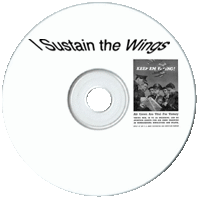
13 old time radio show recordings
(total playtime 5 hours, 5 min)
available in the following formats:
1 MP3 CD
or
6 Audio CDs
Text on OTRCAT.com ©2001-2026 OTRCAT INC All Rights Reserved. Reproduction is prohibited.
Music program (1943-1944)

The American Federation of Musicians had been on strike against the major recording studios since July 31, 1942. This meant that the only employment available to musicians were live radio performances or concerts (after Oct 27, 1943, an exception was made for "V-Discs" which were recorded for the Troop use as part of the War Effort).

When Band Leader Glenn Miller joined the military one of his first assignments was to form a large military marching band that would for the core of several service orchestras. One of these, The Band of the Army Air Force Training Command, was featured weekly as part of CBSs Service Band line up on I Sustain the Wings. From this core of musicians he was allowed to draw fifty to accompany him to England in the summer of 1944 where they gave at least 800 performances. The Orchestra of the AAF Training Command continued the weekly CBS broadcasts.
On Dec 3, 1944, Miller (who had been promoted to Major while in England) arranged to fly to the Continent to set up a concert tour for Band at several Allied Camps. His flight disappeared over the English Channel, and Major Miller was listed as Missing In Action.
See also: military recruiting radio shows. See also: It's Maritime, Fighting AAF, and Wings to Victory.
Text on OTRCAT.com ©2001-2026 OTRCAT INC All Rights Reserved. Reproduction is prohibited.
You have reached the maximum number of votes for a unregistered user.
Please login or create a new account to continue...
You have reached the maximum number to down votes in this page.
Filenames of old time radio shows which are dated as yy-mm-dd. For example:
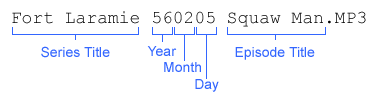
This episode from the series "Fort Laramie" was broadcast on February 5, 1956 with the episode title "Squaw Man"
Filenames of old time radio shows which are dated as yy-mm-dd. For example:
This episode from the series "Fort Laramie" was broadcast on February 5, 1956 with the episode title "Squaw Man"
I Sustain the Wings Disc A001
|
Add Audio CD to Cart - $5.00 |
I Sustain the Wings Disc A002
|
Add Audio CD to Cart - $5.00 |
I Sustain the Wings Disc A003
|
Add Audio CD to Cart - $5.00 |
I Sustain the Wings Disc A004
|
Add Audio CD to Cart - $5.00 |
I Sustain the Wings Disc A005
|
Add Audio CD to Cart - $5.00 |
I Sustain the Wings Disc A006
|
Add Audio CD to Cart - $5.00 |
Please wait...
COMMENTS
Charles Verified Purchase
Leave a comment