
There are stories of bravery and sacrifice, honor and cowardice, desperation and hope from both sides of the conflict.
28 old time radio show recordings
(total playtime 12 hours, 25 min)
available in the following formats:
1 MP3 CD
or
13 Audio CDs
Text on OTRCAT.com ©2001-2026 OTRCAT INC All Rights Reserved. Reproduction is prohibited.

More than participation and victory in WWII, even more than the Revolutionary War, the American Civil War shaped the modern United States.
The "Question of Slavery", considered the cause of the War, had been neatly sidestepped by the founding Fathers and the Framers of the Constitution. The fragile early Union of States and the winning of the Revolution had to be the priority; even then the greatest minds among the Patriots recognized that the issue could tear the States asunder.

The Civil War was the first Industrialized War; use of telegraph, railroads, steam ships and mass produced weapon by both sides set the pattern for future European and Asian Wars. Total War, as demonstrated by Sherman's March through Georgia, and the trench warfare of the Richmond-Petersburg Campaign would be a foreshadow of the first World War.
The Industrialization of the Destruction brings home its futility. Because the American Civil War often pitted neighbor against neighbor, even brother against brother, it is filled with great drama, both real and imagined.

See also: Abraham Lincoln Collection.
Text on OTRCAT.com ©2001-2026 OTRCAT INC All Rights Reserved. Reproduction is prohibited.
You have reached the maximum number of votes for a unregistered user.
Please login or create a new account to continue...
You have reached the maximum number to down votes in this page.
Filenames of old time radio shows which are dated as yy-mm-dd. For example:
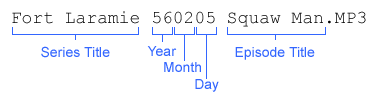
This episode from the series "Fort Laramie" was broadcast on February 5, 1956 with the episode title "Squaw Man"
Filenames of old time radio shows which are dated as yy-mm-dd. For example:
This episode from the series "Fort Laramie" was broadcast on February 5, 1956 with the episode title "Squaw Man"
Civil War Disc A001
|
Add Audio CD to Cart - $5.00 |
Civil War Disc A002
|
Add Audio CD to Cart - $5.00 |
Civil War Disc A003
|
Add Audio CD to Cart - $5.00 |
Civil War Disc A004
|
Add Audio CD to Cart - $5.00 |
Civil War Disc A005
|
Add Audio CD to Cart - $5.00 |
Civil War Disc A006
|
Add Audio CD to Cart - $5.00 |
Civil War Disc A007
|
Add Audio CD to Cart - $5.00 |
Civil War Disc A008
|
Add Audio CD to Cart - $5.00 |
Civil War Disc A009
|
Add Audio CD to Cart - $5.00 |
Civil War Disc A010
|
Add Audio CD to Cart - $5.00 |
Civil War Disc A011
|
Add Audio CD to Cart - $5.00 |
Civil War Disc A012
|
Add Audio CD to Cart - $5.00 |
Civil War Disc A013
|
Add Audio CD to Cart - $5.00 |
Please wait...
COMMENTS
Kurt
Frank Verified Purchase
Leave a comment