
Clarinet Tooter and Musician Master: Artie rivaled swing bandleaders Benny Goodman, Tommy Dorsey and Glenn Miller in the 1930s and 40s.
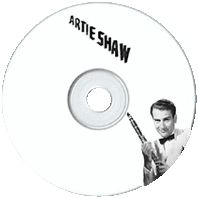
26 old time radio show recordings
(total playtime 10 hours, 22 min)
available in the following formats:
1 MP3 CD
or
11 Audio CDs
Text on OTRCAT.com ©2001-2026 OTRCAT INC All Rights Reserved. Reproduction is prohibited.
Artie Shaw
(1910 – 2004)

Tiring of the toot of the sax, Artie found the clarinet much more pleasing to his tender young ears, and left home a year later to tour America and study his newfound musical passion. The youngster settled in Cleveland for a time, working with Cleveland top band leader, Austin Wylie. Shaw did the arranging and rehearsing for Wylie's band.
Artie fell in love with the music he heard on "race records (then only sold in "colored" neighborhoods) in 1927. Artie picked up a Louis Armstrong record from the late 1920s and zoomed to Chicago to hear the Louie live. He joined Irving Aaronson's band at 19, moving to Hollywood. The band toured in Chicago in the sweltering summer of 1930, where Artie was introduced to the music of Bartok, Stravinsky, Ravel, Debussy and other avant-garde composers.

Text on OTRCAT.com ©2001-2026 OTRCAT INC All Rights Reserved. Reproduction is prohibited.

Text on OTRCAT.com ©2001-2026 OTRCAT INC All Rights Reserved. Reproduction is prohibited.
For more big band swing, see also: Benny Goodman, Tommy Dorsey and Glenn Miller. See also: B.A. Rolfe and His Orchestra.
Text on OTRCAT.com ©2001-2026 OTRCAT INC All Rights Reserved. Reproduction is prohibited.
You have reached the maximum number of votes for a unregistered user.
Please login or create a new account to continue...
You have reached the maximum number to down votes in this page.
Filenames of old time radio shows which are dated as yy-mm-dd. For example:
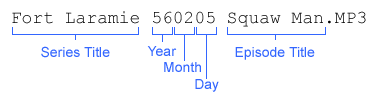
This episode from the series "Fort Laramie" was broadcast on February 5, 1956 with the episode title "Squaw Man"
Filenames of old time radio shows which are dated as yy-mm-dd. For example:
This episode from the series "Fort Laramie" was broadcast on February 5, 1956 with the episode title "Squaw Man"
Artie Shaw Disc A001
|
Add Audio CD to Cart - $5.00 |
Artie Shaw Disc A002
|
Add Audio CD to Cart - $5.00 |
Artie Shaw Disc A003
|
Add Audio CD to Cart - $5.00 |
Artie Shaw Disc A004
|
Add Audio CD to Cart - $5.00 |
Artie Shaw Disc A005
|
Add Audio CD to Cart - $5.00 |
Artie Shaw Disc A006
|
Add Audio CD to Cart - $5.00 |
Artie Shaw Disc A007
|
Add Audio CD to Cart - $5.00 |
Artie Shaw Disc A008
|
Add Audio CD to Cart - $5.00 |
Artie Shaw Disc A009
|
Add Audio CD to Cart - $5.00 |
Artie Shaw Disc A010
|
Add Audio CD to Cart - $5.00 |
Artie Shaw Disc A011
|
Add Audio CD to Cart - $5.00 |
Please wait...
COMMENTS
Bryan Verified Purchase
Michael Verified Purchase
Anne Verified Purchase
Robert Verified Purchase
Jason Verified Purchase
Steve Verified Purchase
Ron Verified Purchase
Dan Verified Purchase
Thomas Verified Purchase
Leave a comment