
old time radio's favorite Fred Allen stars in this early version of Allen's Alley with his famous ad libbing and funny amateur guest stars.
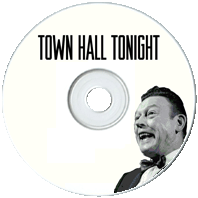
26 old time radio show recordings
(total playtime 22 hours, 36 min)
available in the following formats:
1 MP3 CD
or
25 Audio CDs
Text on OTRCAT.com ©2001-2026 OTRCAT INC All Rights Reserved. Reproduction is prohibited.

He got his radio start hosting The Linit Bath Club Revue which lasted for a single season in 1932. Allen had trouble getting along with the sponsor, but the show was successful enough to attract imitators. One of the imitators was less successful than they had hoped, and with Allen unemployed, they hired him for what would become The Salad Bowl Revue, sponsored by Hellman's Mayonnaise. The show was intended to run through the summer, salad eating months of 1933, but managed to stay on the air through December (when the sponsor discovered, according to Allen, "there was nothing to put their mayonnaise on but the actors.")
Allen managed to keep the show running in the same time slot with the same cast, crew, orchestra and format, now as the Sal Hepatica Revue. The laxative was the product of Bristol Myers, who also produced Ipana Tooth Paste, the product sponsoring the show following Fred's. The sponsor became convinced that it would be more effective to have a single show plugging both products and filling the entire hour. The show became The Hour of Smiles in 1934. Allen was allowed to tinker with the format, and hit upon a 
Even more popular were the cast of regulars, Fred's wife Portland Hoffa and The Mighty Allen Art Players, the troupe of players that presented the sketch portion of the show. In addition to the professional players Allen took great delight in featuring amateurs. The acts were always unique, if not talented, and gave Allen a chance to ad lib. (It was an very talented young violin player appearing as an amateur that started the famous Fred Allen- Jack Benny mock feud, when Allen made less than favorable comparisons between the youngster and Benny's violin playing.)
The show became Town Hall Tonight in the 1934 season, and lasted until 1940. In the last season the sponsor insisted on changing the name to The Fred Allen Show and insisted there be more "Big Name" guests. This pushed out Allen's beloved amateurs, and when there came a chance to move to CBS for Texaco Star Theater Allen and company were more than happy to roll up their tent and move on.
Text on OTRCAT.com ©2001-2026 OTRCAT INC All Rights Reserved. Reproduction is prohibited.
You have reached the maximum number of votes for a unregistered user.
Please login or create a new account to continue...
You have reached the maximum number to down votes in this page.
Filenames of old time radio shows which are dated as yy-mm-dd. For example:
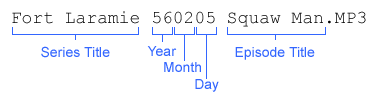
This episode from the series "Fort Laramie" was broadcast on February 5, 1956 with the episode title "Squaw Man"
Filenames of old time radio shows which are dated as yy-mm-dd. For example:
This episode from the series "Fort Laramie" was broadcast on February 5, 1956 with the episode title "Squaw Man"
Town Hall Tonight (Fred Allen) Disc A001
|
Add Audio CD to Cart - $5.00 |
Town Hall Tonight (Fred Allen) Disc A002
|
Add Audio CD to Cart - $5.00 |
Town Hall Tonight (Fred Allen) Disc A003
|
Add Audio CD to Cart - $5.00 |
Town Hall Tonight (Fred Allen) Disc A004
|
Add Audio CD to Cart - $5.00 |
Town Hall Tonight (Fred Allen) Disc A005
|
Add Audio CD to Cart - $5.00 |
Town Hall Tonight (Fred Allen) Disc A006
|
Add Audio CD to Cart - $5.00 |
Town Hall Tonight (Fred Allen) Disc A007
|
Add Audio CD to Cart - $5.00 |
Town Hall Tonight (Fred Allen) Disc A008
|
Add Audio CD to Cart - $5.00 |
Town Hall Tonight (Fred Allen) Disc A009
|
Add Audio CD to Cart - $5.00 |
Town Hall Tonight (Fred Allen) Disc A010
|
Add Audio CD to Cart - $5.00 |
Town Hall Tonight (Fred Allen) Disc A011
|
Add Audio CD to Cart - $5.00 |
Town Hall Tonight (Fred Allen) Disc A012
|
Add Audio CD to Cart - $5.00 |
Town Hall Tonight (Fred Allen) Disc A013
|
Add Audio CD to Cart - $5.00 |
Town Hall Tonight (Fred Allen) Disc A014
|
Add Audio CD to Cart - $5.00 |
Town Hall Tonight (Fred Allen) Disc A015
|
Add Audio CD to Cart - $5.00 |
Town Hall Tonight (Fred Allen) Disc A016
|
Add Audio CD to Cart - $5.00 |
Town Hall Tonight (Fred Allen) Disc A017
|
Add Audio CD to Cart - $5.00 |
Town Hall Tonight (Fred Allen) Disc A018
|
Add Audio CD to Cart - $5.00 |
Town Hall Tonight (Fred Allen) Disc A019
|
Add Audio CD to Cart - $5.00 |
Town Hall Tonight (Fred Allen) Disc A020
|
Add Audio CD to Cart - $5.00 |
Town Hall Tonight (Fred Allen) Disc A021
|
Add Audio CD to Cart - $5.00 |
Town Hall Tonight (Fred Allen) Disc A022
|
Add Audio CD to Cart - $5.00 |
Town Hall Tonight (Fred Allen) Disc A023
|
Add Audio CD to Cart - $5.00 |
Town Hall Tonight (Fred Allen) Disc A024
|
Add Audio CD to Cart - $5.00 |
Town Hall Tonight (Fred Allen) Disc A025
|
Add Audio CD to Cart - $5.00 |
Please wait...
COMMENTS
Jan Verified Purchase
Robin Verified Purchase
Leave a comment