
Laugh with this old time radio comedic variety hour starring Alan Young, Francis Langford, Dick Powell, Milton Berle, Frank Sinatra, and many others!
31 old time radio show recordings
(total playtime 15 hours, 19 min)
available in the following formats:
1 MP3 CD
or
16 Audio CDs
Text on OTRCAT.com ©2001-2026 OTRCAT INC All Rights Reserved. Reproduction is prohibited.

It seems strange, but movies and radio turned out to be a great match for each other. They really shouldn't been. Radio depends on sound and dialogue to deliver the story. Moving pictures depend on, well, pictures. In the end, the important part of both media is the stories and the skill with which they are presented.

The Old Gold Comedy Theatre was an attempt to capitalize on a similar format. All of these programs benefited from the use of the movie stories. The name of the picture would have been familiar to listeners, and so attract audiences. Listeners also got to enjoy many more movies over the radio than they would have been able to see in their local movie palace, especially listeners for whom the movie palace was not all that local. The movie based shows were also an effective means of advertising the pictures themselves.


DeMille's radio role was largely that of scholarly and dignified presenter, whereas Harold Lloyd became part of the action, participating in the "play within a play" commercials, as well as introducing the plays.
The biggest factor to set Old Gold Comedy Theatre apart from the other movie anthology shows was its concentration on Screwball Comedies. The screwball comedy became popular during the Great Depression with its fast pace, farcical situations, and romantic "Boy And Girl Fall In Love Against The Odds" themes.
The comic film adaptations were well written for the radio, but the half-hour format made it necessary to cut a significant amount of either the humor or the story from the final script. All too often, too much of each was lost. The other factor that hobbled Comedy Theatre was that Lloyd, who was a genius in silent films, had a fear of the live microphone. Although most critics agree he improved as the season progressed, the show only lasted one year.
Text on OTRCAT.com ©2001-2026 OTRCAT INC All Rights Reserved. Reproduction is prohibited.
You have reached the maximum number of votes for a unregistered user.
Please login or create a new account to continue...
You have reached the maximum number to down votes in this page.
Filenames of old time radio shows which are dated as yy-mm-dd. For example:
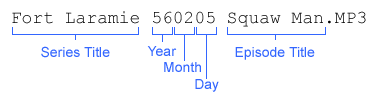
This episode from the series "Fort Laramie" was broadcast on February 5, 1956 with the episode title "Squaw Man"
Filenames of old time radio shows which are dated as yy-mm-dd. For example:
This episode from the series "Fort Laramie" was broadcast on February 5, 1956 with the episode title "Squaw Man"
Old Gold Comedy (Harold Lloyd Comedy Theater) Disc A001
|
Add Audio CD to Cart - $5.00 |
Old Gold Comedy (Harold Lloyd Comedy Theater) Disc A002
|
Add Audio CD to Cart - $5.00 |
Old Gold Comedy (Harold Lloyd Comedy Theater) Disc A003
|
Add Audio CD to Cart - $5.00 |
Old Gold Comedy (Harold Lloyd Comedy Theater) Disc A004
|
Add Audio CD to Cart - $5.00 |
Old Gold Comedy (Harold Lloyd Comedy Theater) Disc A005
|
Add Audio CD to Cart - $5.00 |
Old Gold Comedy (Harold Lloyd Comedy Theater) Disc A006
|
Add Audio CD to Cart - $5.00 |
Old Gold Comedy (Harold Lloyd Comedy Theater) Disc A007
|
Add Audio CD to Cart - $5.00 |
Old Gold Comedy (Harold Lloyd Comedy Theater) Disc A008
|
Add Audio CD to Cart - $5.00 |
Old Gold Comedy (Harold Lloyd Comedy Theater) Disc A009
|
Add Audio CD to Cart - $5.00 |
Old Gold Comedy (Harold Lloyd Comedy Theater) Disc A010
|
Add Audio CD to Cart - $5.00 |
Old Gold Comedy (Harold Lloyd Comedy Theater) Disc A011
|
Add Audio CD to Cart - $5.00 |
Old Gold Comedy (Harold Lloyd Comedy Theater) Disc A012
|
Add Audio CD to Cart - $5.00 |
Old Gold Comedy (Harold Lloyd Comedy Theater) Disc A013
|
Add Audio CD to Cart - $5.00 |
Old Gold Comedy (Harold Lloyd Comedy Theater) Disc A014
|
Add Audio CD to Cart - $5.00 |
Old Gold Comedy (Harold Lloyd Comedy Theater) Disc A015
|
Add Audio CD to Cart - $5.00 |
Old Gold Comedy (Harold Lloyd Comedy Theater) Disc A016
|
Add Audio CD to Cart - $5.00 |
Please wait...
COMMENTS
Be the first to comment on "Old Gold Comedy (Harold Lloyd Comedy Theater)"
Leave a comment