
By Hollywood standards, a cowboy had to be as good with his guitar as he was with his rope and saddle. Tex Ritter fit the bill on Hollywood Rodeo.
1 old time radio show recordings
(total playtime 26 min)
available in the following formats:
1 MP3 CD
or
1 Audio CDs
Text on OTRCAT.com ©2001-2026 OTRCAT INC All Rights Reserved. Reproduction is prohibited.

Hollywood Rodeo is very similar in format and content to the later All Star Western Theater. Tex Ritter would be an occasional guest on the later show. Rodeo was conceived as a tribute to the modern Cowboy. Never mind that from the Hollywood's perspective a cowboy often had to be as good with his guitar as his rope and saddle.

Hollywood Rodeo imitated a Rodeo format. Coming out of "Chute One" was the "Buckaroo Quizaroo" that gave members of the studio audience a chance to win War Stamps. Later is an interview with guest star, Hollywood Stuntman Yakima Canutt, followed by a short drama about a Rodeo whose gate money had been stolen. Whenever the action slows for a moment it is filled with Cowboy music and comedy by sidekick Soapy Jones. A particular tug at the heart-strings is the song "There's a Gold Star in Her Window" about a Mother's sacrifice during Wartime.
Roscoe Ates, having overcome a terrible stuttering problem, began show-biz as a concert violinist, but soon realized there was more money in Vaudeville. He would be involved in many films, fifteen of which featured his Soapy Jones character.
Text on OTRCAT.com ©2001-2026 OTRCAT INC All Rights Reserved. Reproduction is prohibited.
You have reached the maximum number of votes for a unregistered user.
Please login or create a new account to continue...
You have reached the maximum number to down votes in this page.
Filenames of old time radio shows which are dated as yy-mm-dd. For example:
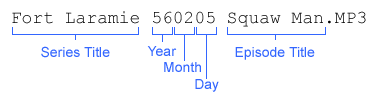
This episode from the series "Fort Laramie" was broadcast on February 5, 1956 with the episode title "Squaw Man"
Filenames of old time radio shows which are dated as yy-mm-dd. For example:
This episode from the series "Fort Laramie" was broadcast on February 5, 1956 with the episode title "Squaw Man"
Hollywood Rodeo Disc A001
|
Add Audio CD to Cart - $5.00 |
Please wait...
COMMENTS
Be the first to comment on "Hollywood Rodeo"
Leave a comment