
Fred Allen moved from Vaudeville to radio and perfected his character over a number of years for several sponsors. One of his career highlights was a supposed feud with his good friend, Jack Benny.
195 old time radio show recordings
(total playtime 121 hours, 4 min)
available in the following formats:
3 MP3 CDs
or
123 Audio CDs
Text on OTRCAT.com ©2001-2026 OTRCAT INC All Rights Reserved. Reproduction is prohibited.
Fred Allen
(1894 – 1956)


His father was a amusing storyteller who worked at the craft of bookbinding. Intelligent sharp witted humor seemed to run in the family. Fred wanted to be on the stage from an early age. Getting started as a juggler, by the early 1920's Fred was on the road, and began performing in New York City.
His big break came when he appeared on Broadway in The Passing Show in 1922. In this show, he met the lovely Miss Portland Hoffa, who he asked to become his wife and radio partner (ala Burns and Allen). Together they developed a wonderful give and take rapport, with Portland serving up the bubbly straight lines for Fred's witty rejoinders. They got on the radio in 1932 with a show called, improbably, "The Lintit Bath Club Revue." Other shows followed quickly, including The Salad Bowl Revue (1933), The Sal Hepatica Revue (1933-34) and The Hour of Smiles (1934-35). One of the featured segments in the early years was a segment where amateurs came up to do their bit, harkening back to the days of regional vaudeville itself when Amateur Night was a staple of the local theatre.
Text on OTRCAT.com 2001-2010 OTRCAT INC All Rights Reserved-Reproduction is prohibited.

Fred Allen with dummy circa 1916Allen's comedy was almost always topical and satiric, and throughout his career he was famed for being as sharp with the quip as any live radio comedian. He wrote most of his own stuff, loved to comment on the daily foibles of the day, his sponsors, and the world of entertainment. In the New England spirit, he saw his show as something of a town hall gathering, and hit upon the name "Town Hall Tonight" as the show from 1934-39.
In 1939, Texaco sponsorship began, and the show was renamed in truly modern fashion, "The Fred Allen Show - Texaco Star Theater." One of his funniest and most popular regular segments, Allen's Alley, premiered on Sunday, December 6th, 1942. Allen strolled along in an imaginary neighborhood, knocking on the "doors" of various neighbors, including average-American John Doe (played by John Brown), Mrs. Nussbaum (Minerva Pious) pompous poet Falstaff Openshaw (Allan Reed),
Parker Fennelly as Titus Moody("Howdy, bub"), and boisterous southern senator Beuregard Claghorn (announcer Kenny Delmar.)
Among Fred Allen's greatest admirers was Jack Benny, with whom a feud (ala Edgar Bergen and McCarthy's with W.C. Fields) was created in 1936. It lasted on the air for years, to the amusement of all concerned. Sadly, a feud with his network brought the network censor into another feud, but other radio stars such as Red Skelton and Benny's pal Dennis Day, who got his own show too, took up for Allen by cracking jokes about the whole thing.

Allen's prime seasons of 1945-48 are great satirical radio, loaded with topical laughs, musical parodies and great characters that are timeless in their inventiveness and audience appeal. Allen was famous for ad-lib bing and cracking up the audience with running comments on the jokes and the show itself, as he had come up from Vaudeville and Broadway. After WWII, the Fred Allen show seemed somewhat dated, as the temper of the nation was ready for a new thing. In 1948 Allen's Alley (an urban concept, really) was heard no more on network radio. An era had passed, as America moved to the suburban 1950s.

See also: Down Allen's Alley (with Fred Allen)

Text on OTRCAT.com ©2001-2026 OTRCAT INC All Rights Reserved. Reproduction is prohibited.
You have reached the maximum number of votes for a unregistered user.
Please login or create a new account to continue...
You have reached the maximum number to down votes in this page.
Filenames of old time radio shows which are dated as yy-mm-dd. For example:
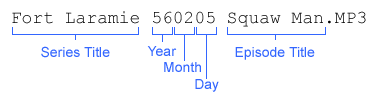
This episode from the series "Fort Laramie" was broadcast on February 5, 1956 with the episode title "Squaw Man"
Filenames of old time radio shows which are dated as yy-mm-dd. For example:
This episode from the series "Fort Laramie" was broadcast on February 5, 1956 with the episode title "Squaw Man"
Fred Allen Disc A001
|
Add Audio CD to Cart - $5.00 |
Fred Allen Disc A002
|
Add Audio CD to Cart - $5.00 |
Fred Allen Disc A003
|
Add Audio CD to Cart - $5.00 |
Fred Allen Disc A004
|
Add Audio CD to Cart - $5.00 |
Fred Allen Disc A005
|
Add Audio CD to Cart - $5.00 |
Fred Allen Disc A006
|
Add Audio CD to Cart - $5.00 |
Fred Allen Disc A007
|
Add Audio CD to Cart - $5.00 |
Fred Allen Disc A008
|
Add Audio CD to Cart - $5.00 |
Fred Allen Disc A009
|
Add Audio CD to Cart - $5.00 |
Fred Allen Disc A010
|
Add Audio CD to Cart - $5.00 |
Fred Allen Disc A011
|
Add Audio CD to Cart - $5.00 |
Fred Allen Disc A012
|
Add Audio CD to Cart - $5.00 |
Fred Allen Disc A013
|
Add Audio CD to Cart - $5.00 |
Fred Allen Disc A014
|
Add Audio CD to Cart - $5.00 |
Fred Allen Disc A015
|
Add Audio CD to Cart - $5.00 |
Fred Allen Disc A016
|
Add Audio CD to Cart - $5.00 |
Fred Allen Disc A017
|
Add Audio CD to Cart - $5.00 |
Fred Allen Disc A018
|
Add Audio CD to Cart - $5.00 |
Fred Allen Disc A019
|
Add Audio CD to Cart - $5.00 |
Fred Allen Disc A020
|
Add Audio CD to Cart - $5.00 |
Fred Allen Disc A021
|
Add Audio CD to Cart - $5.00 |
Fred Allen Disc A022
|
Add Audio CD to Cart - $5.00 |
Fred Allen Disc A023
|
Add Audio CD to Cart - $5.00 |
Fred Allen Disc A024
|
Add Audio CD to Cart - $5.00 |
Fred Allen Disc A025
|
Add Audio CD to Cart - $5.00 |
Fred Allen Disc A026
|
Add Audio CD to Cart - $5.00 |
Fred Allen Disc A027
|
Add Audio CD to Cart - $5.00 |
Fred Allen Disc A028
|
Add Audio CD to Cart - $5.00 |
Fred Allen Disc A029
|
Add Audio CD to Cart - $5.00 |
Fred Allen Disc A030
|
Add Audio CD to Cart - $5.00 |
Fred Allen Disc A031
|
Add Audio CD to Cart - $5.00 |
Fred Allen Disc A032
|
Add Audio CD to Cart - $5.00 |
Fred Allen Disc A033
|
Add Audio CD to Cart - $5.00 |
Fred Allen Disc A034
|
Add Audio CD to Cart - $5.00 |
Fred Allen Disc A035
|
Add Audio CD to Cart - $5.00 |
Fred Allen Disc A036
|
Add Audio CD to Cart - $5.00 |
Fred Allen Disc A037
|
Add Audio CD to Cart - $5.00 |
Fred Allen Disc A038
|
Add Audio CD to Cart - $5.00 |
Fred Allen Disc A039
|
Add Audio CD to Cart - $5.00 |
Fred Allen Disc A040
|
Add Audio CD to Cart - $5.00 |
Fred Allen Disc A041
|
Add Audio CD to Cart - $5.00 |
Fred Allen Disc A042
|
Add Audio CD to Cart - $5.00 |
Fred Allen Disc A043
|
Add Audio CD to Cart - $5.00 |
Fred Allen Disc A044
|
Add Audio CD to Cart - $5.00 |
Fred Allen Disc A045
|
Add Audio CD to Cart - $5.00 |
Fred Allen Disc A046
|
Add Audio CD to Cart - $5.00 |
Fred Allen Disc A047
|
Add Audio CD to Cart - $5.00 |
Fred Allen Disc A048
|
Add Audio CD to Cart - $5.00 |
Fred Allen Disc A049
|
Add Audio CD to Cart - $5.00 |
Fred Allen Disc A050
|
Add Audio CD to Cart - $5.00 |
Fred Allen Disc A051
|
Add Audio CD to Cart - $5.00 |
Fred Allen Disc A052
|
Add Audio CD to Cart - $5.00 |
Fred Allen Disc A053
|
Add Audio CD to Cart - $5.00 |
Fred Allen Disc A054
|
Add Audio CD to Cart - $5.00 |
Fred Allen Disc A055
|
Add Audio CD to Cart - $5.00 |
Fred Allen Disc A056
|
Add Audio CD to Cart - $5.00 |
Fred Allen Disc A057
|
Add Audio CD to Cart - $5.00 |
Fred Allen Disc A058
|
Add Audio CD to Cart - $5.00 |
Fred Allen Disc A059
|
Add Audio CD to Cart - $5.00 |
Fred Allen Disc A060
|
Add Audio CD to Cart - $5.00 |
Fred Allen Disc A061
|
Add Audio CD to Cart - $5.00 |
Fred Allen Disc A062
|
Add Audio CD to Cart - $5.00 |
Fred Allen Disc A063
|
Add Audio CD to Cart - $5.00 |
Fred Allen Disc A064
|
Add Audio CD to Cart - $5.00 |
Fred Allen Disc A065
|
Add Audio CD to Cart - $5.00 |
Fred Allen Disc A066
|
Add Audio CD to Cart - $5.00 |
Fred Allen Disc A067
|
Add Audio CD to Cart - $5.00 |
Fred Allen Disc A068
|
Add Audio CD to Cart - $5.00 |
Fred Allen Disc A069
|
Add Audio CD to Cart - $5.00 |
Fred Allen Disc A070
|
Add Audio CD to Cart - $5.00 |
Fred Allen Disc A071
|
Add Audio CD to Cart - $5.00 |
Fred Allen Disc A072
|
Add Audio CD to Cart - $5.00 |
Fred Allen Disc A073
|
Add Audio CD to Cart - $5.00 |
Fred Allen Disc A074
|
Add Audio CD to Cart - $5.00 |
Fred Allen Disc A075
|
Add Audio CD to Cart - $5.00 |
Fred Allen Disc A076
|
Add Audio CD to Cart - $5.00 |
Fred Allen Disc A077
|
Add Audio CD to Cart - $5.00 |
Fred Allen Disc A078
|
Add Audio CD to Cart - $5.00 |
Fred Allen Disc A079
|
Add Audio CD to Cart - $5.00 |
Fred Allen Disc A080
|
Add Audio CD to Cart - $5.00 |
Fred Allen Disc A081
|
Add Audio CD to Cart - $5.00 |
Fred Allen Disc A082
|
Add Audio CD to Cart - $5.00 |
Fred Allen Disc A083
|
Add Audio CD to Cart - $5.00 |
Fred Allen Disc A084
|
Add Audio CD to Cart - $5.00 |
Fred Allen Disc A085
|
Add Audio CD to Cart - $5.00 |
Fred Allen Disc A086
|
Add Audio CD to Cart - $5.00 |
Fred Allen Disc A087
|
Add Audio CD to Cart - $5.00 |
Fred Allen Disc A088
|
Add Audio CD to Cart - $5.00 |
Fred Allen Disc A089
|
Add Audio CD to Cart - $5.00 |
Fred Allen Disc A090
|
Add Audio CD to Cart - $5.00 |
Fred Allen Disc A091
|
Add Audio CD to Cart - $5.00 |
Fred Allen Disc A092
|
Add Audio CD to Cart - $5.00 |
Fred Allen Disc A093
|
Add Audio CD to Cart - $5.00 |
Fred Allen Disc A094
|
Add Audio CD to Cart - $5.00 |
Fred Allen Disc A095
|
Add Audio CD to Cart - $5.00 |
Fred Allen Disc A096
|
Add Audio CD to Cart - $5.00 |
Fred Allen Disc A097
|
Add Audio CD to Cart - $5.00 |
Fred Allen Disc A098
|
Add Audio CD to Cart - $5.00 |
Fred Allen Disc A099
|
Add Audio CD to Cart - $5.00 |
Fred Allen Disc A100
|
Add Audio CD to Cart - $5.00 |
Fred Allen Disc A101
|
Add Audio CD to Cart - $5.00 |
Fred Allen Disc A102
|
Add Audio CD to Cart - $5.00 |
Fred Allen Disc A103
|
Add Audio CD to Cart - $5.00 |
Fred Allen Disc A104
|
Add Audio CD to Cart - $5.00 |
Fred Allen Disc A105
|
Add Audio CD to Cart - $5.00 |
Fred Allen Disc A106
|
Add Audio CD to Cart - $5.00 |
Fred Allen Disc A107
|
Add Audio CD to Cart - $5.00 |
Fred Allen Disc A108
|
Add Audio CD to Cart - $5.00 |
Fred Allen Disc A109
|
Add Audio CD to Cart - $5.00 |
Fred Allen Disc A110
|
Add Audio CD to Cart - $5.00 |
Fred Allen Disc A111
|
Add Audio CD to Cart - $5.00 |
Fred Allen Disc A112
|
Add Audio CD to Cart - $5.00 |
Fred Allen Disc A113
|
Add Audio CD to Cart - $5.00 |
Fred Allen Disc A114
|
Add Audio CD to Cart - $5.00 |
Fred Allen Disc A115
|
Add Audio CD to Cart - $5.00 |
Fred Allen Disc A116
|
Add Audio CD to Cart - $5.00 |
Fred Allen Disc A117
|
Add Audio CD to Cart - $5.00 |
Fred Allen Disc A118
|
Add Audio CD to Cart - $5.00 |
Fred Allen Disc A119
|
Add Audio CD to Cart - $5.00 |
Fred Allen Disc A120
|
Add Audio CD to Cart - $5.00 |
Fred Allen Disc A121
|
Add Audio CD to Cart - $5.00 |
Fred Allen Disc A122
|
Add Audio CD to Cart - $5.00 |
Fred Allen Disc A123
|
Add Audio CD to Cart - $5.00 |
Please wait...
COMMENTS
Pat Verified Purchase
Richard Verified Purchase
Ginger Verified Purchase
Jason Verified Purchase
Rebecca Verified Purchase
Richard Verified Purchase
Randy Verified Purchase
Ian Verified Purchase
Mike Verified Purchase
Walt Verified Purchase
Mike Verified Purchase
Steve Verified Purchase
Craig Verified Purchase
Fred Verified Purchase
Craig Verified Purchase
James Verified Purchase
Rick
Dan Verified Purchase
Leave a comment